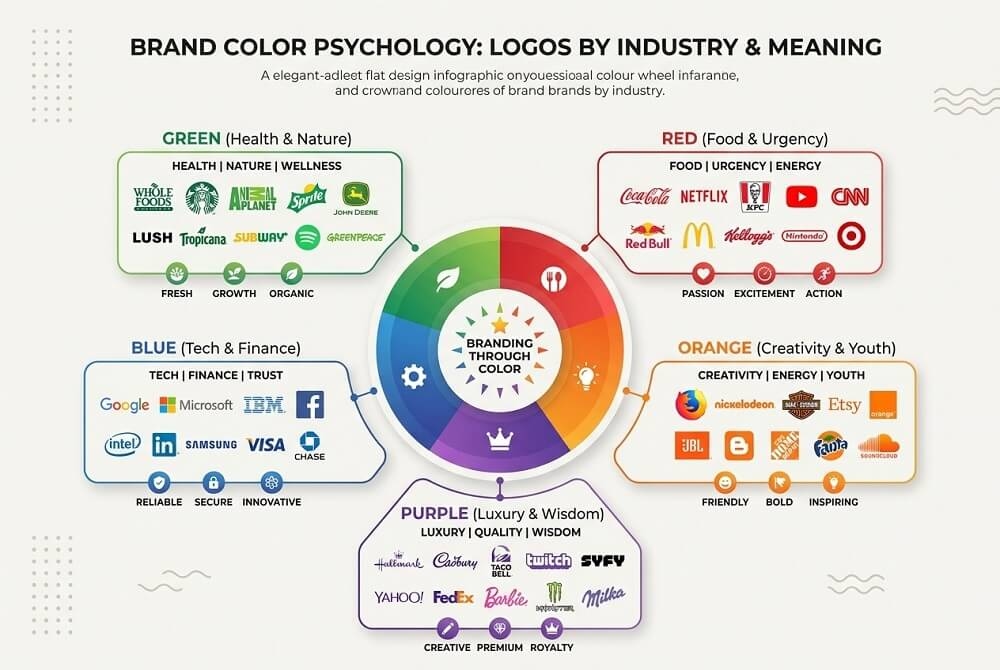
Colour is one of the most immediate and powerful tools available in branding – and one of the most frequently underestimated. Research suggests that colour alone can account for up to 85% of the reason a consumer decides to purchase a product. Yet many businesses select their brand palette based on personal preference rather than strategic intent.
Understanding colour psychology – how different hues affect human perception, emotion, and behaviour – allows brands to make deliberate choices that reinforce their positioning and drive meaningful results.
How Colour Communicates Before Words Do
When a user lands on your website, encounters your packaging, or sees your advertisement, their brain processes the colour before it reads a single word. That initial impression shapes everything that follows. Colour communicates values, personality, and category membership instantaneously.
This is why so many financial institutions use blue (trust, stability, security), why organic and health brands gravitate toward green (nature, wellness, growth), and why fast food companies frequently use red and yellow (energy, appetite stimulation, urgency).
Key Colours and Their Associations
- Blue: Trust, professionalism, calm, and reliability. Widely used in finance, technology, and healthcare. One of the safest choices for B2B brands seeking to inspire confidence.
- Green: Growth, health, sustainability, and prosperity. Effective for brands in wellness, environment, finance, and any business with an ethical or natural positioning.
- Red: Energy, urgency, passion, and appetite. Powerful for driving action – commonly used in call-to-action buttons, food brands, and retail promotions.
- Orange: Warmth, creativity, enthusiasm, and accessibility. Less aggressive than red, it conveys friendliness and approachability while maintaining energy.
- Purple: Luxury, wisdom, creativity, and premium quality. Frequently used by high-end brands and those seeking to project sophistication.
- Black: Elegance, authority, and exclusivity. A dominant choice for luxury fashion and premium product branding.
- Yellow: Optimism, clarity, and attention-grabbing energy. Effective in moderation; used to highlight and direct the eye.
The Importance of Context and Combination
Individual colours do not operate in isolation. The combinations you choose – your primary, secondary, and accent palette – work together to create a visual impression that is greater than the sum of its parts. A bold primary colour paired with a neutral base conveys confidence without overwhelming. Complementary colours create vibrancy; analogous palettes create harmony.